Modern digital experiences demand instant feedback. Whether processing real-time telemetry, routing mission-critical enterprise workloads, or attributing high-frequency marketing clicks, today's internet users expect responses within milliseconds.
At RenderX, we set an uncompromising technical baseline: every edge interaction must complete in under 50 milliseconds globally, regardless of origin.
Achieving this level of performance while maintaining 99.99% availability required us to rethink our entire engineering work strategy. In this article, we break down the architectural blueprint, systems design decisions, and operational workflows that power our distributed cloud infrastructure.
Architecture Principle: Minimize data travel distance. Moving computation to the edge nearest to the user always beats optimizing an origin server sitting 6,000 miles away.
In a traditional monolithic architecture, every incoming client request travels from the user's browser across public transit networks to a centralized data center (often located in us-east-1 or eu-west-1).
For a user in Tokyo or Singapore connecting to a Virginia origin, the speed of light alone introduces 160ms+ of physical round-trip time (RTT). Add TLS handshake negotiation, DNS lookup overhead, database connection pooling, and business logic execution, and total time-to-first-byte (TTFB) easily climbs past 800ms.
Traditional Flow:
[User in Tokyo] ──(180ms RTT)──> [Origin Server in Virginia] ──(DB Query)──> [Response (850ms)]

RenderX Edge Flow:
[User in Tokyo] ──(8ms RTT)───> [RenderX Edge Node Tokyo] ──(Edge KV/Cache)─> [Response (24ms)]
By decentralizing request resolution and executing compute at the network edge across 300+ PoPs (Points of Presence), RenderX slashes latency by up to 95%.
To achieve low-latency ingestion without sacrificing data integrity, RenderX employs an event-driven, decoupled ingestion pipeline:
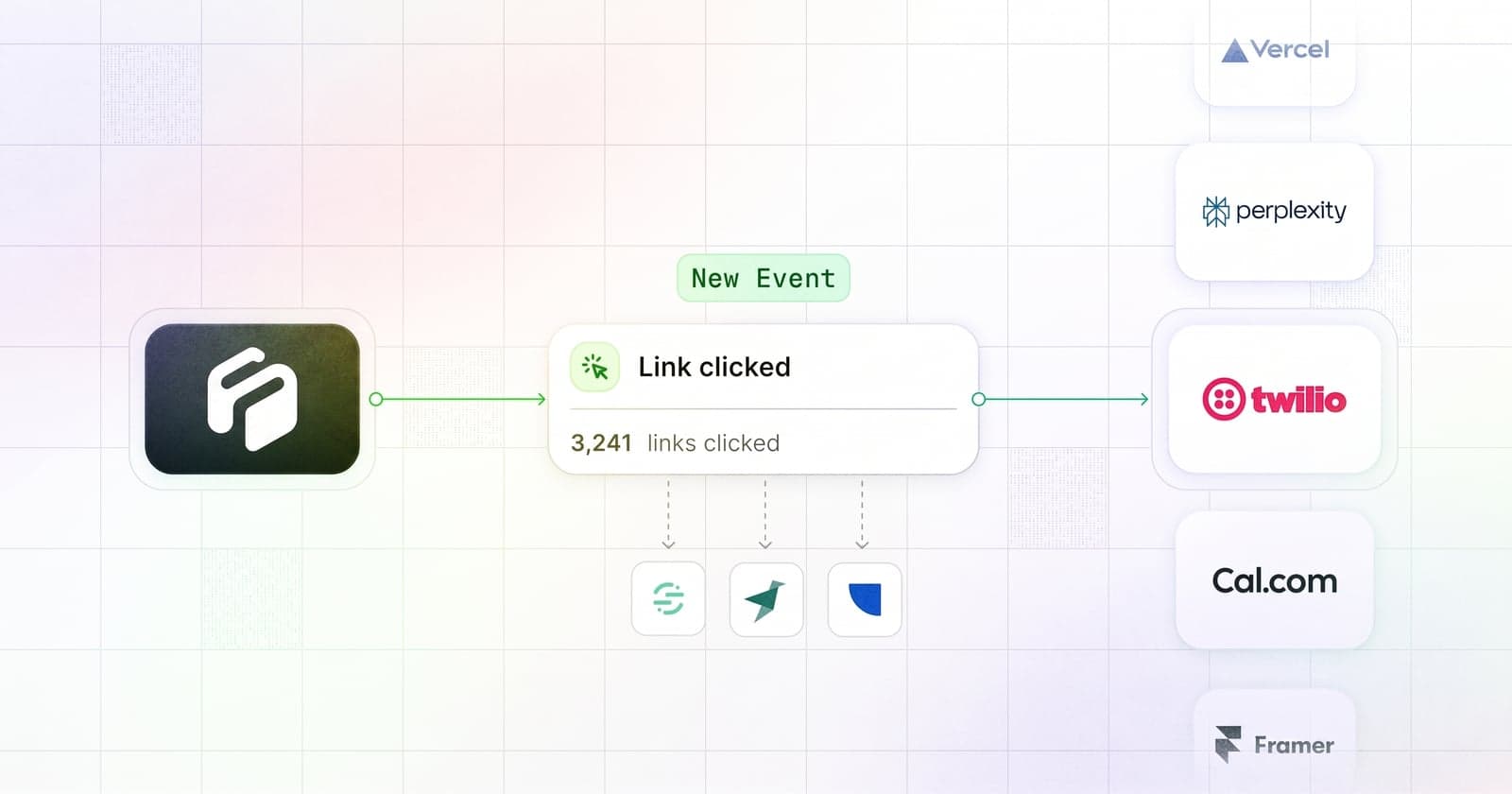
Incoming client requests (webhooks, API calls, and telemetry events) are terminated immediately at the closest Cloudflare edge worker node. The edge node performs:
- Cryptographic signature validation (HMAC SHA-256)
- Geolocation enrichment and bot verification
- First-party attribution cookie resolution
- Response dispatch back to the client in < 15ms
Instead of writing synchronously to an operational database, the edge worker streams validated event payloads into an Apache Kafka cluster partitioned by workspace and tenant ID.
This ensures that sudden traffic spikes—such as viral marketing campaigns or product launches—never exhaust database connection pools or degrade customer dashboards.
Events from Kafka are consumed and routed into two distinct datastores:
- ClickHouse Columnar Cluster: Highly optimized for real-time aggregation queries, conversion funnels, and multidimensional analytics.
- Upstash Redis Cluster: Sub-millisecond in-memory cache for fast lookups, rate limiting, and session verification.
Storage Tip: Columnar databases like ClickHouse compress telemetry data by up to 80% compared to traditional relational row stores, while speeding up analytical queries across billions of rows by 50x.
| Metric / Capability | Legacy Monolithic Stack | RenderX Distributed Edge Stack |
|---|---|---|
| Global P95 Latency | 450ms – 1,200ms | 22ms – 48ms |
| Availability SLA | 99.9% (single-region risk) | 99.99% (multi-region active-active) |
| Throughput Scaling | Vertical auto-scaling (slow warmup) | Instantaneous horizontal edge elasticity |
| Analytics Query Speed | Slow SQL joins on transactional DB | Columnar ClickHouse aggregations (< 80ms) |
| Deployment Downtime | Scheduled maintenance windows | Atomic zero-downtime rolling deploys |
Here is an example of our edge worker pipeline written in TypeScript, showing how requests are authenticated, validated against strict Zod schemas, and dispatched asynchronously:
import { NextRequest, NextResponse } from "next/server";
import { z } from "zod";

// Strict schema validation for incoming telemetry events
const EventPayloadSchema = z.object({
  eventId: z.string().uuid(),
  tenantId: z.string().min(3),
  eventType: z.enum(["page_view", "conversion", "custom_action"]),
  metadata: z.record(z.unknown()),
  timestamp: z.number().default(() => Date.now()),
});

export const config = {
  runtime: "edge",
  regions: ["all"], // Deploy to 300+ edge locations globally
};

export default async function handler(req: NextRequest) {
  const startTime = performance.now();

  try {
    // 1. Fast path verification
    const apiKey = req.headers.get("x-renderx-key");
    if (!apiKey) {
      return NextResponse.json({ error: "Missing API Key" }, { status: 401 });
    }

    // 2. Parse and validate JSON payload
    const body = await req.json();
    const validated = EventPayloadSchema.parse(body);

    // 3. Dispatch to Kafka queue via background execution context
    // Does not block the HTTP response cycle
    edgeContext.waitUntil(
      fetch(process.env.KAFKA_HTTP_BRIDGE_URL!, {
        method: "POST",
        headers: { "Content-Type": "application/json" },
        body: JSON.stringify({
          topic: `tenant.${validated.tenantId}.events`,
          messages: [{ key: validated.eventId, value: validated }],
        }),
      })
    );

    const elapsed = Math.round(performance.now() - startTime);

    return NextResponse.json(
      { success: true, eventId: validated.eventId, latencyMs: elapsed },
      { status: 202, headers: { "X-RenderX-Ray": crypto.randomUUID() } }
    );
  } catch (error) {
    return NextResponse.json(
      { error: "Invalid event payload", details: (error as Error).message },
      { status: 400 }
    );
  }
}
Edge Worker Consideration: Edge environments have strict CPU execution limits (typically 50ms wall-clock). Always use background async execution for tasks like logging, streaming, and telemetry dispatch.
Enterprise engineering platforms do not exist in isolation. A foundational part of our work strategy is building seamless native bridges into every tool our customers depend on:
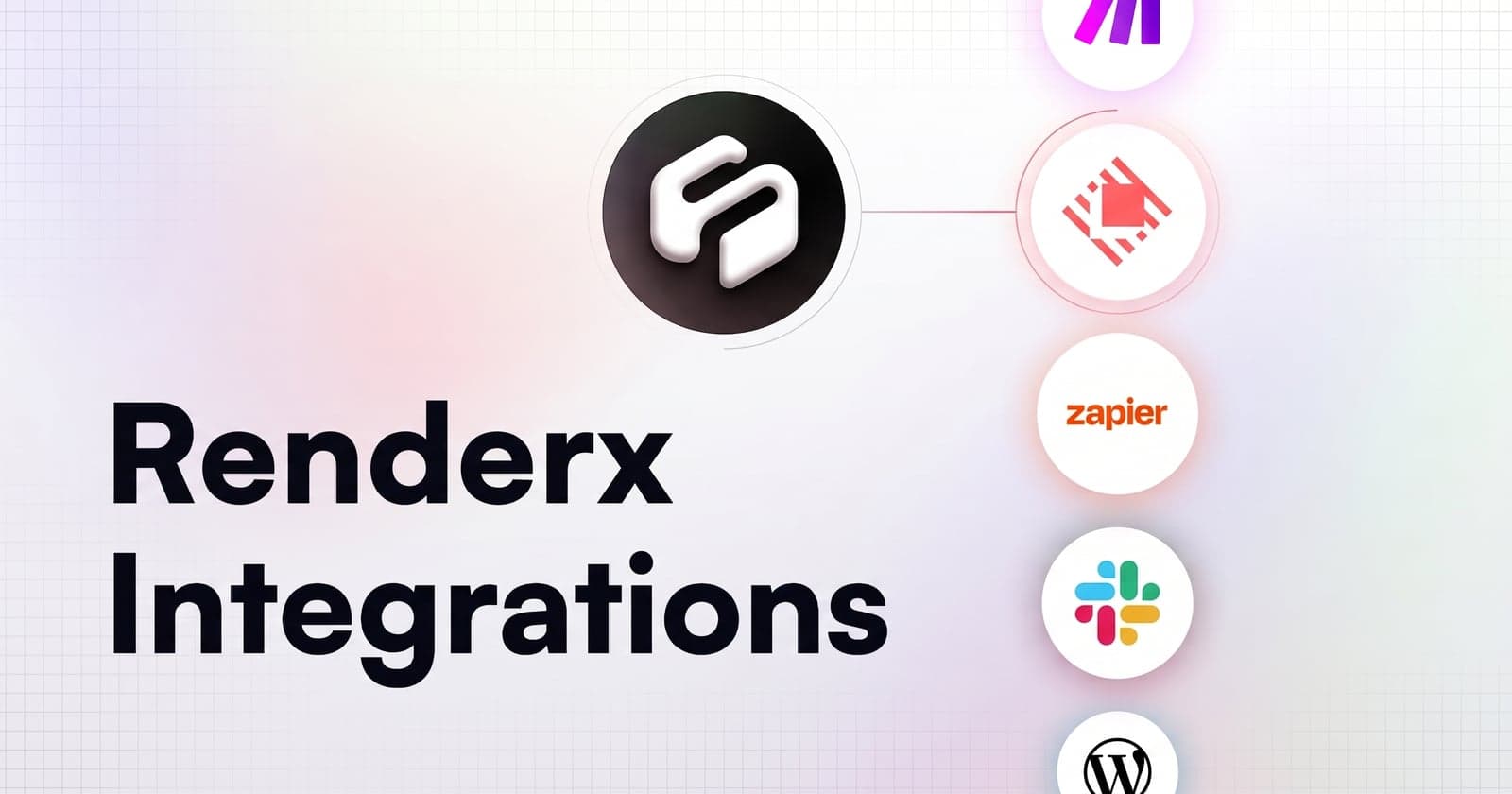
Our event routing layer includes automated webhooks with:
- Exponential Backoff & Jitter: 5 automatic retry attempts over 24 hours to prevent destination server exhaustion.
- Circuit Breakers: Suspends outbound deliveries if the customer endpoint returns persistent 5xx server errors, safeguarding downstream systems.
- Enterprise Connectors: Plug-and-play integrations with Zapier, Slack, Twilio, Cal.com, Framer, and WordPress.
Designing systems for scale requires balancing bleeding-edge velocity with conservative operational discipline:
Reliability at scale isn't an accident of good software; it is the deliberate elimination of single points of failure. By moving execution logic to the edge and buffering data pipelines through resilient queues, RenderX handles billions of monthly events with rock-solid consistency.

As you scale your software stack, keep these four principles at the core of your architectural planning:
- Adopt Latency Budgets: Set strict boundaries on client-side JS bundles, database queries, and network hops. If a feature breaches your 50ms budget, it cannot ship to production.
- Decouple Ingestion from Processing: Never execute heavy analytical queries or third-party webhooks inside the critical user-facing request path. Use asynchronous background queues.
- Automate Continuous Verification: Integrate end-to-end type checking (
tsc --noEmit), linting, and automated static page validation into your CI/CD pipeline before any deployment touches production. - Design for Failure: Assume network partitions and region outages will happen. Implement automated circuit breakers, fallback caches, and multi-region failover.
By adhering to this work strategy, RenderX delivers developer tooling and cloud platforms that grow seamlessly alongside our enterprise customers.
Ready to supercharge your infrastructure? Explore our Enterprise Solutions or contact our engineering team to learn more.